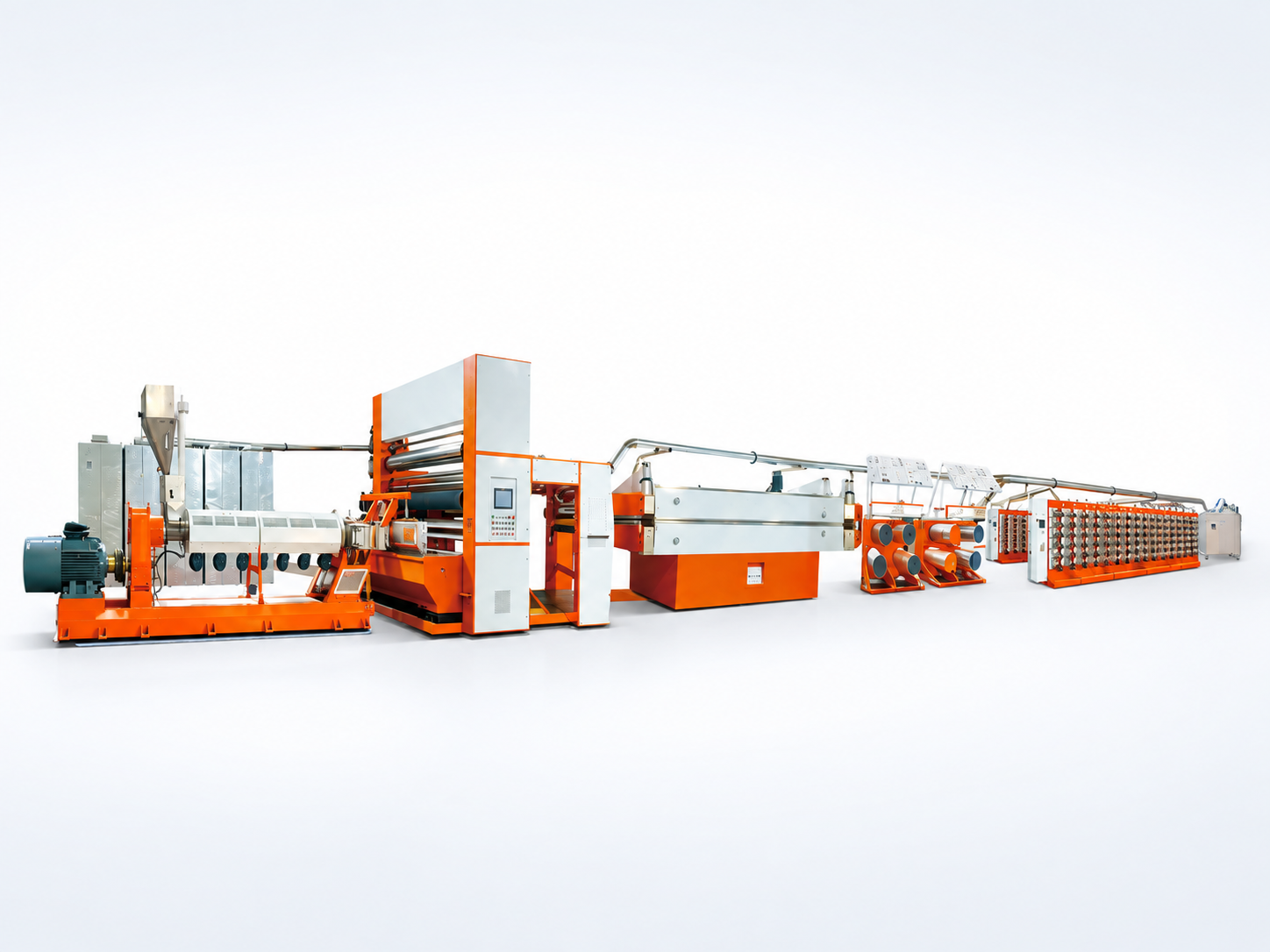
PP Woven Bag Production Line: Complete Equipment List and Workflow
A PP woven bag production line is a sequence of machines that turns raw polypropylene granules into finished woven bags. Each stage depends on the one before it — so a weak link anywhere reduces the output of the entire line.
Whether you are building a new plant or expanding an existing one, understanding the full workflow helps you plan capacity, budget, and floor space correctly. This guide walks through each machine in the line, in production order, and explains what to check at every stage.
Stage 1 — Extrusion: Making Flat Tape (Yarn)
The line starts with
PP granules fed into an extruder. The extruder melts the material and pushes it through a die to form a thin film, which is then slit into narrow tapes and stretched.
This is the
flat tape extrusion line. The quality of the tape determines the strength of the final woven bag.
What to check:
- Tape width and thickness range
- Output capacity (kg/hour) matched to your loom count
- Number of tape positions (spindles) on the winder
- Power requirement and heating system
Stage 2 — Weaving: Turning Tape Into Fabric
The tapes are wound onto bobbins and loaded into a
circular loom, which weaves them into a continuous tube of woven fabric.
Circular looms are rated by shuttle count. More shuttles generally mean wider fabric and higher output.
What to check:
- Fabric width and loom size
- Number of shuttles (e.g. four, six, or eight shuttle)
- Weaving speed and expected output per day
- Compatibility with the tape produced by your extruder
The
six-shuttle circular loom is a common choice for standard woven bag production because it balances output, fabric width, and cost.
Stage 3 — Lamination (Optional)
Not every bag needs lamination, but many do.
Laminating machines bond a film layer onto the woven fabric to add strength, moisture resistance, and printability.
There are two main technologies — dry lamination and solventless lamination — and the right one depends on your material structure and environmental requirements.
What to check:
- Whether you need lamination at all for your product
- Adhesive type and drying requirement
- Line width and speed matched to your looms
- Material structure the machine can handle
Stage 4 — Cutting and Printing
Laminated (or unlaminated) fabric moves to
cutting and printing stages.
- Cutting machines cut the fabric tube into individual bag lengths
- Printing applies brand and product information, either on the fabric roll or on the finished bag
- Some lines combine cutting and sealing in one unit
What to check:
- Bag length range and cutting accuracy
- Printing method (flexo, gravure) and color count
- Integration between cutting and sewing stages
Stage 5 — Bag Making: Sewing, Sealing, and Finishing
The final production stage turns cut fabric pieces into finished bags. This can include:
- Bag making machines that cut, fold, and seal bag ends
- Sewing machines for stitched bag bottoms or top edges
- Handle and valve attachment for special bag types
- Heat cut sewing machines for sealed and stitched edges
What to check:
- Output speed matched to upstream cutting capacity
- Bag size range and changeover time
- Automation level and operator requirement
Additional equipment such as
waste edge rewinding machines and
industrial chillers supports the line by recycling trim waste and controlling process temperature.
Planning Your Full Line
When planning a complete line, work backwards from your target output:
- Define finished output — how many bags per day, and at what size
- Calculate bag making capacity — how many bag making machines you need
- Match cutting and printing capacity
- Match lamination capacity if required
- Size the weaving department — how many circular looms
- Size the extrusion line — enough tape for all looms
- Add support equipment — chillers, waste rewinding, packing
A line is only as fast as its slowest stage. Over-specifying one machine and under-specifying another wastes capital and creates bottlenecks.
Why Factory-Direct Supply Matters for a Full Line
Buying a complete line from one manufacturer simplifies compatibility, spare parts, and technical support. Machines from different suppliers may have mismatched speeds, voltages, or fabric specifications.
Grace International is an integrated manufacturer and trading company based in PingYang, Wenzhou, China. Since 2013 we have supplied extrusion lines, circular looms, laminating machines, bag making machines, and support equipment — configured to each customer’s production plan.
Frequently Asked Questions
What machines are needed for a complete PP woven bag production line?
An extrusion line for flat tape, circular looms for weaving, optionally a laminating machine, then cutting, printing, and bag making equipment, plus support machines such as chillers and waste edge rewinding units.
What is the minimum order quantity?
One unit per machine model. Complete lines can be supplied in stages as your production grows.
How long does delivery take?
About one month per machine, depending on model and configuration. For complete lines, delivery is scheduled to match your installation plan.
Can you help plan the capacity of the whole line?
Yes. Tell us your target daily bag output and bag sizes, and our engineering team will recommend the machine combination and configuration.
What materials does the line process?
PP and PE, including woven fabric and film combinations depending on the equipment.
Next Step
If you are planning a new woven bag plant or expanding an existing line, send us your target output and bag sizes. Our engineering team will work out the complete equipment list and configuration for your project.
Machinery ·
Extrusion Lines ·
Circular Looms ·
Laminating Machines ·
Bag Making Machines ·
Request a Quote